
My Level 2 Survey Recommends a Structural Engineer: What Now?
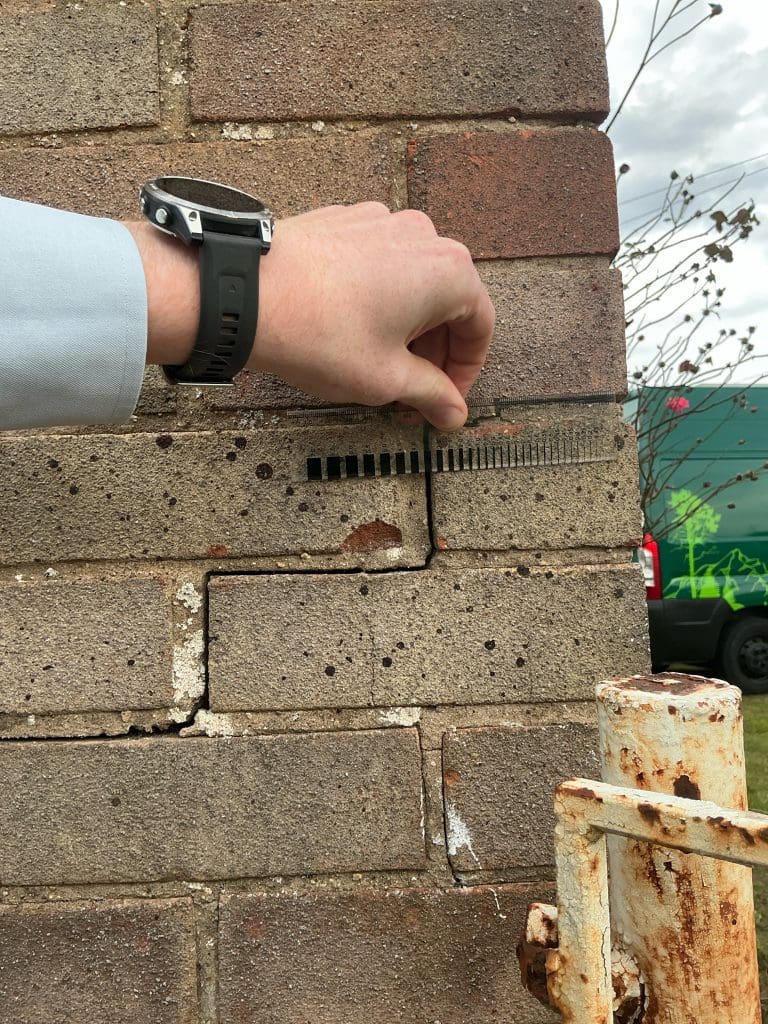
If your Level 2 survey recommends a structural engineer, your surveyor has seen cracking or movement that needs a closer look before you commit to buying. It is not a verdict that the house is unsound. In many cases a structural engineer’s inspection shows the movement is old, stable or minor, and you get a clear written answer before you exchange contracts.
Why has my surveyor recommended a structural engineer?
A Level 2 survey is a general condition survey of the whole property, from the roof to the drains. Your surveyor is looking at everything, so when they see signs of movement they can’t fully explain on a visual inspection, the responsible thing is to recommend a specialist. That’s your surveyor doing their job well.
Common reasons for the recommendation include:
- Cracks in walls, especially stepped or diagonal cracks in brickwork
- Cracks above doors and windows, or doors that stick
- Walls that bulge or lean
- Floors that slope noticeably
- Signs the roof is pushing the walls outwards
- Evidence of past repairs, such as crack stitching or a rebuilt section of wall
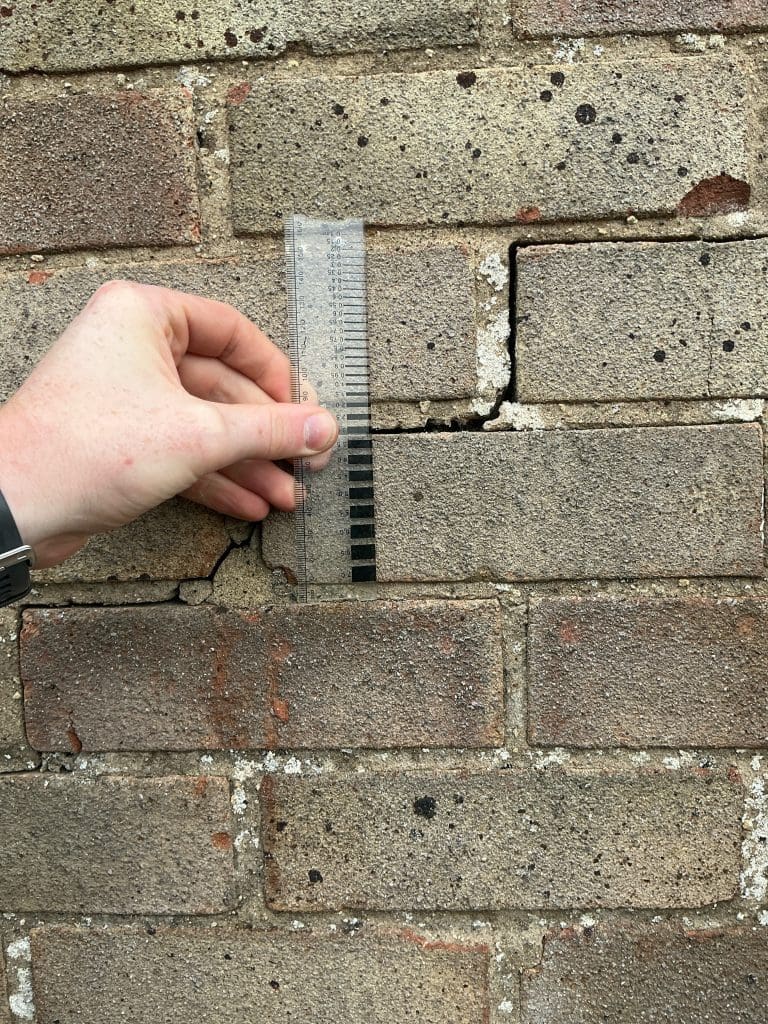
A stepped crack measured with a crack width gauge. This is the kind of crack a surveyor will rightly flag for a structural engineer.
Does it mean something is seriously wrong?
Usually not. Older homes move a little over their lifetime, and many of the Victorian and Edwardian terraces I inspect in Bishopston, Redland and Horfield show some historic movement that stopped decades ago. The question isn’t whether there’s a crack. It’s what caused it, whether it is still moving, and whether it needs any work.
If you’d like to understand cracks a little better first, my guide to cracks in walls, when to worry, and what they actually mean explains what to look for.
Is a structural engineer’s report the same as a Level 3 Survey (previously called ‘structural survey’)?
Not quite, although people often use the terms interchangeably. A Level 2 or Level 3 survey looks at the condition of the whole property. A structural engineer’s report focuses only on the structure: what is causing the movement, whether it is ongoing, how serious it is, and what, if anything, you need to do about it.
The two work together. Your surveyor spots the issue, and the structural report answers the question their survey has raised.
What should I do next?
- Read the wording. Note exactly which wall, crack or area the surveyor wants looked at.
- Tell your solicitor and estate agent. Your solicitor will want to see the report, and the agent can arrange access with the seller.
- Hold off exchanging contracts. Once you exchange, you’re committed to the purchase, so get your answer first.
- Get a quote. Send the relevant section of your survey with your enquiry. It helps me recommend the right inspection straight away.
- Book the inspection. I will inspect the property on your behalf, and send you a report with my professional opinion in 48 hours.
If your mortgage lender has also asked for a structural engineer’s report, mention it when you enquire so the report covers what they need. They will be looking for someone with the credentials MICE or MISTRUCTE.
What happens during the inspection?
I visit the property and inspect the area your surveyor flagged. I measure crack widths, check walls for tilt and floors for slopes, and look for the likely cause, such as nearby trees, leaking drains, a failed lintel, roof spread or past alterations. It is a visual, non-invasive inspection, so nothing is opened up or damaged.
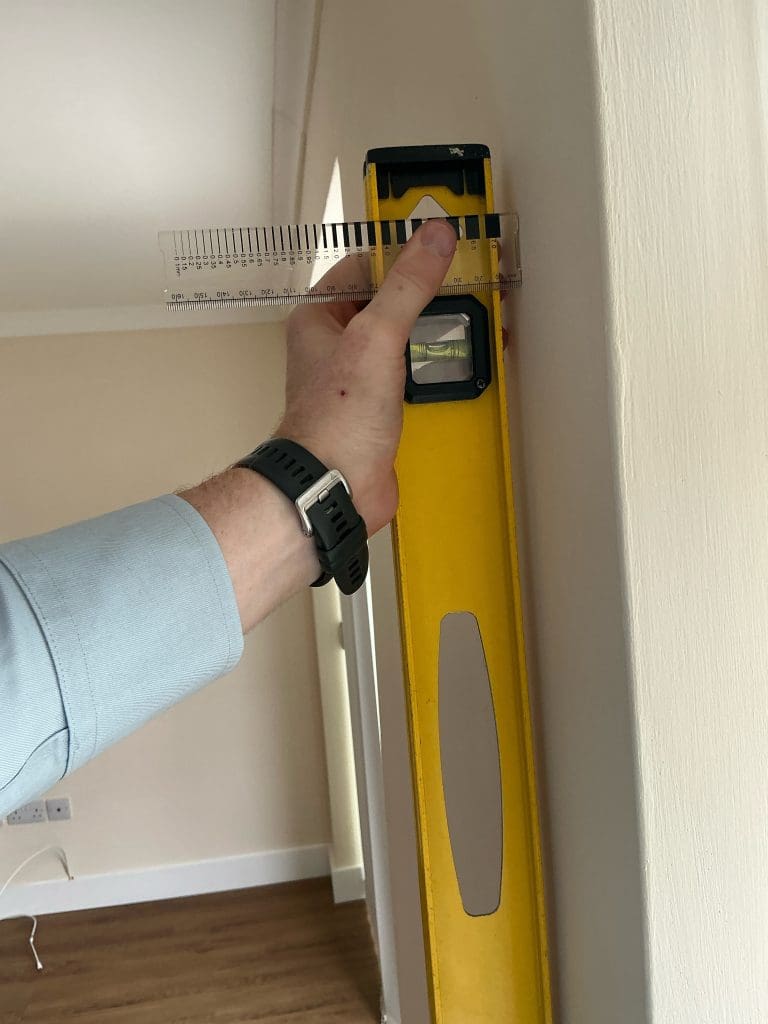
Checking a wall for tilt with a spirit level during an inspection.
You receive your written report within 48 hours of the inspection, in plain English, with photos and a clear conclusion. You can read more about How It Works.
What might the report recommend?
Most reports end in one of three places:
- No structural action needed. The movement is historic or cosmetic, and filling and redecorating is all that’s required.
- Further investigation. If the cause can’t be confirmed from a visual inspection, the report may recommend further investigations before any repair is decided. This could be a drainage survey, monitoring a crack over several months, or trial holes to check the foundations. The report explains what’s needed and why.
- Repairs. This might be replacing a lintel, crack stitching, or tying in a roof. The report explains what’s needed so a builder can quote, and gives you facts to discuss with your agent and solicitor.
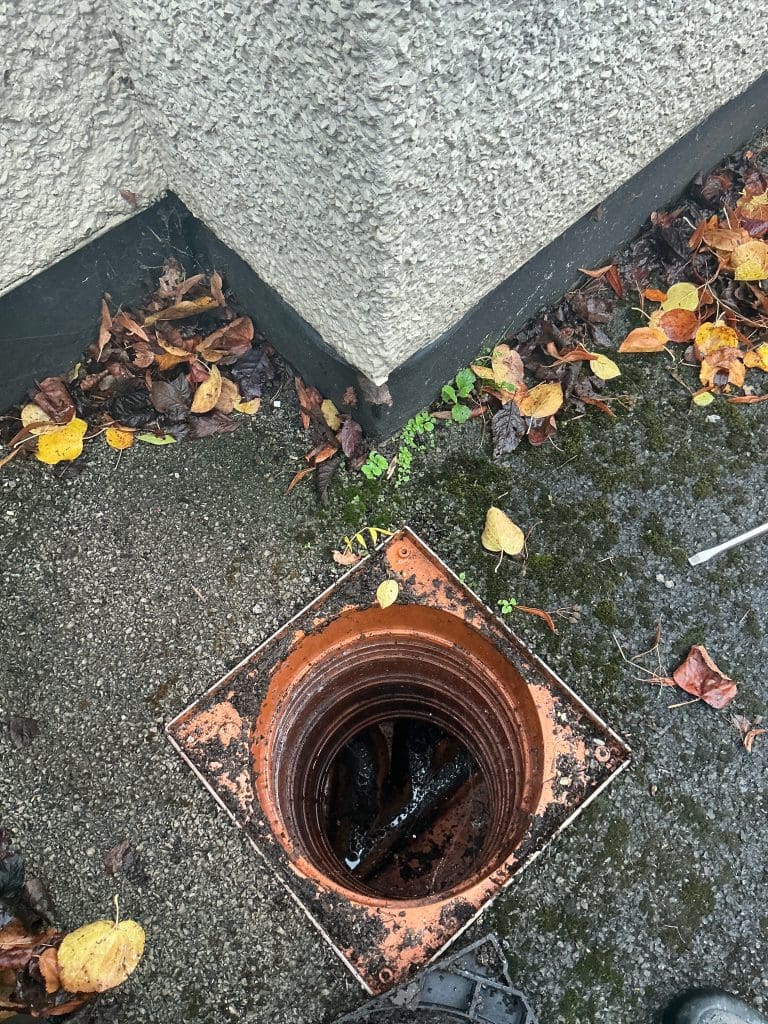
Drainage requiring further investigation
I don’t carry out repairs or design work, so I have nothing to sell you after the report. My only job is to give you an honest answer.
Do I definitely need one?
If your survey recommends a structural engineer, yes, get it done before you exchange. Your solicitor and lender are likely to expect it, and it’s far easier to deal with any issue before you own the house. If the survey only mentions fine plaster cracks and doesn’t recommend further investigation, you probably don’t.
Which report do you need?
- Specific Structural Inspection (SSI): one crack or one defect. £570 including VAT, fixed fee.
- General Structural Inspection (GSI): several cracks or wider concerns about the structure. From £810 including VAT, depending on the size of the property.
Both include a written report within 48 hours of the inspection. Not sure which applies? This guide explains the difference: Specific vs General Structural Inspection. There’s more on pricing in how much a structural engineer’s report costs.
Frequently asked questions
Who pays for the structural engineer’s report?
Usually the buyer, as the report is for your benefit and your decision.
Does the seller need to agree?
Yes, because I need access to the property. The estate agent normally arranges this with the seller.
How quickly will I get the report?
Within 48 hours of the inspection. When you enquire, I’ll tell you how far ahead I’m currently booking.
Can I use the report to renegotiate the price?
It can give you the facts to do so. If repairs are needed, the report sets them out clearly, and you can discuss them with your agent and solicitor.
Should I send the report to my surveyor?
It isn’t usually needed, but your solicitor and mortgage lender may ask to see it.
Not Sure Which Report You Need?
Whether it’s one crack or a concern about the whole property, we’ll help you find the right report, and give you a fixed-fee quote within one working day.

Fast Quoting,
No-Obligation
Tell us what you're concerned about and we'll come back with a clear quote, no jargon, no pressure, no obligation. You'll know the cost and what's included before you commit to anything.

48-Hour
Reports
Once the inspection's done, you're not left waiting. You'll have your full written report within 48 hours, so you can make a decision and move on, whether that's reassurance or next steps.

Qualified Engineer,
Not a Call Centre
You deal directly with me, a Chartered Structural Engineer (CEng MICE), from quote to inspection to report. No handoffs, no junior inspector standing in.

Plain-Language Reports
No dense technical jargon you need a second opinion to understand. Every report tells you plainly what's causing the problem, how serious it is, and what, if anything, you need to do next.
Ready for Clarity on Your Crack or Structural Concern?
Tell us a bit about what you've noticed and the property, and we'll come back with which report's right for you and a clear, no-obligation quote. We'll then confirm a date and get your report to you within 48 hours of the inspection.
Prefer to call or email?
Call us on 01452 790 887
Or email us here at:
office@lifelys.co.uk