
Structural Issues in Cheltenham: What Homeowners and Buyers Should Know
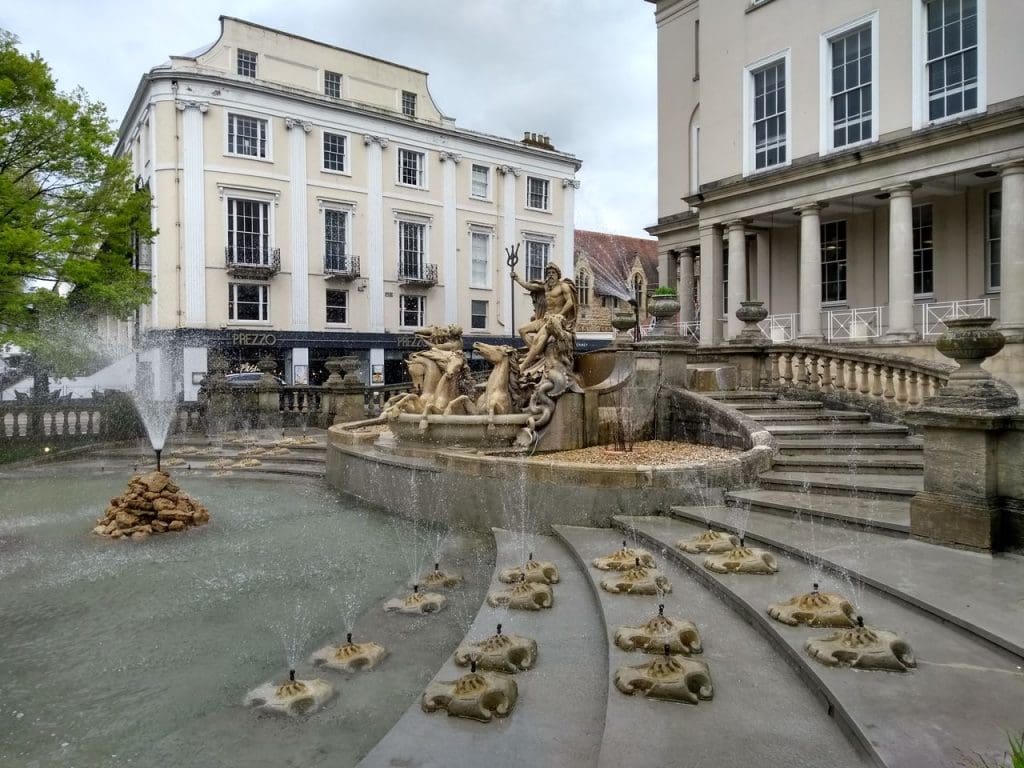
Two things shape structural problems in Cheltenham. What the town is built of, and what it is built on.
The first is easy to see. Cheltenham is one of the most complete Regency towns in England, and its best known streets are rendered and painted rather than faced in stone. The second is invisible and matters more. The town sits on a spread of sand and gravel washed off the Cotswold escarpment, laid over Lias clay, and the boundary between the two runs under the streets with no regard for where anybody later put a house.
That combination produces a particular set of problems, and they are not the same as the ones in Gloucester eight miles away.
The ground can change within a single street
Around Cheltenham, on the western footslope of the Cotswolds, are wide spreads of quartzose sand and limestone gravel, mapped as the Cheltenham Sand and Gravel. Where a house sits on a decent thickness of it, founding conditions are generally good and clay shrinkage is not the issue. Where that spread thins or runs out, the house is on Lias clay instead, which shrinks and swells with moisture and reacts to nearby trees.
The practical consequence catches people out. Two houses in the same road, built at the same time by the same builder, can behave quite differently, because one is on gravel and the other is on clay. It also explains a pattern I see often in Cheltenham: an original house sitting still while a later extension moves, or the other way round, because the extension foundations found different ground.
This is worth knowing before you draw conclusions from a neighbour’s experience. Cracking is a property level question here more than a street level one.
Render is not the same as the wall behind it
Most of Regency Cheltenham is brick with a stucco render finish, and a great deal of what gets reported as structural cracking is a render problem rather than a wall problem.
Render fails in its own right. It debonds from the brickwork behind and sounds hollow when tapped, it crazes and maps as it ages, and it cracks around the edges of openings where the substrate changes. Later cement renders and cement based repairs cause their own trouble, because they trap moisture against soft brick and eventually blow off, taking a face of brick with them.
But render also hides things, and it telegraphs movement in a way that can be misleading. A crack that runs through both the render and the masonry behind it is telling you something. A crack that stops at the render is telling you something quite different, and much cheaper. Working out which one you have is one of the most common reasons I am called out in Montpellier, Lansdown and The Suffolks.
Cheltenham’s ironwork adds a related issue. The town is full of cast iron balconies, verandas and railings, and where iron is built into masonry it rusts and expands. Corroding embedded ironwork splits stone and brick locally and produces cracking that looks structural but is a corrosion problem with a corrosion solution.
The Chelt runs under the town
The River Chelt passes through Cheltenham and is culverted for much of its route through the centre. There are also older watercourses, drains and culverts across the town that predate most of the housing above them.
That matters in two ways. Culverts and drains leak, and a leaking drain washing fines out of sand and gravel is a genuine cause of localised settlement, usually very local and often affecting one corner or one bay of a building. And the Chelt floods. The 2007 floods are still the local benchmark, and low lying parts of the town along the Chelt and the Hatherley Brook remain sensitive.
A flood risk search will tell you whether water is likely to arrive. It will not tell you what previous water has done to the building, or whether the cracking at the back of the house relates to a leaking culvert underneath it.
The scarp edge
East and south of the town the ground rises steeply to the escarpment at Leckhampton, Battledown, Charlton Kings and Cleeve Hill. Along this edge the geology is hard limestone over weak Lias mudstone, which is the standard recipe for cambering and landslip, and the slopes carry mapped mass movement deposits formed from reworked Lias.
Leckhampton also carries a legacy of quarrying into the hillside. For properties on the scarp slopes, cracking should be assessed with slope movement in mind rather than assumed to be tree related, and the many garden and boundary retaining walls up there deserve more attention than they usually get.
Where I fit
Most enquiries follow the same route. A survey or a mortgage valuation flags cracking and recommends a structural engineer, and nothing moves until somebody produces a report.
I inspect and report. I do not design repairs, produce calculations or specify remedial work, and I have no relationship with any contractor. That independence is the whole point. The person telling you whether you need underpinning should not be the person who profits if you do, and in Gloucester, where so much of what I see turns out to be seasonal clay movement rather than progressive subsidence, that distinction saves people a great deal of money.
Reports are issued within 24 hours of the inspection.
Areas I cover
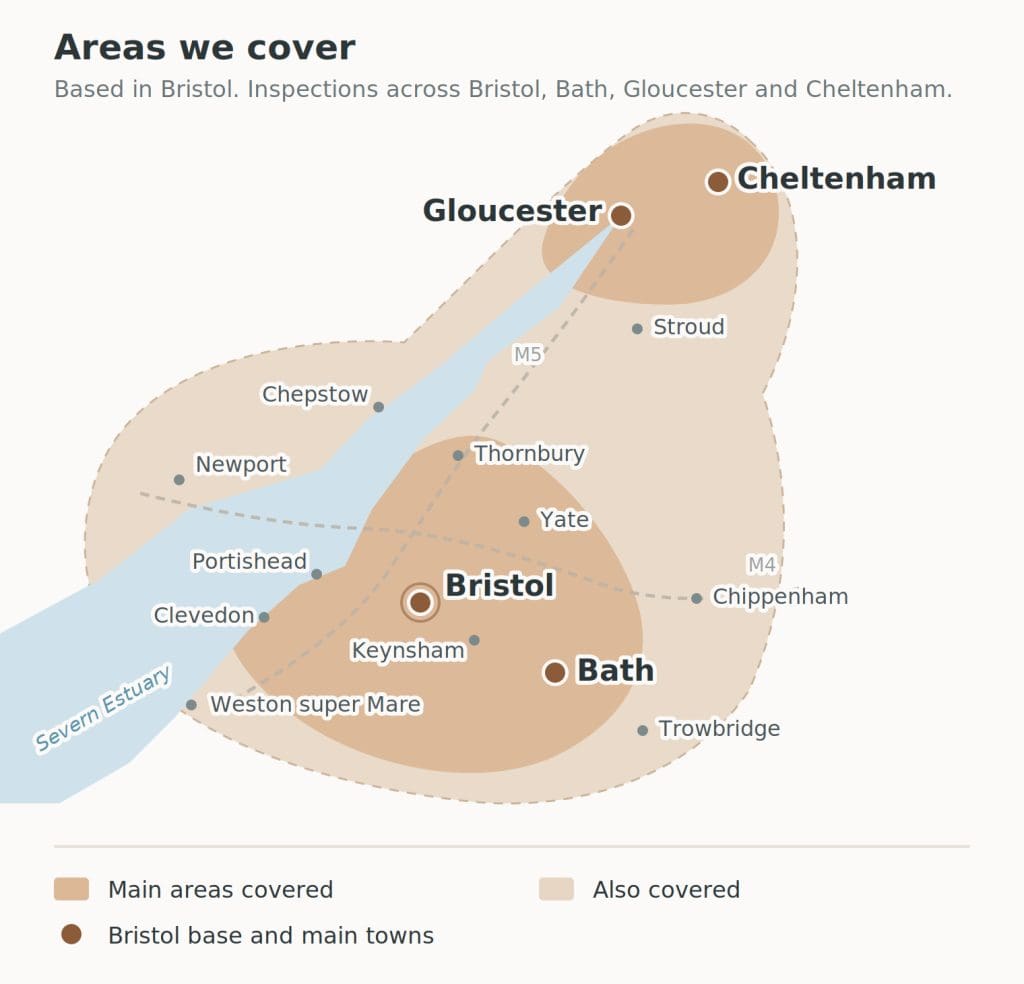
Cheltenham and the surrounding GL postcodes, alongside Gloucester, Bristol and Bath. Lifelys started in Gloucester in 2007 and this has been part of my working area ever since.
Common questions
Why do two houses in the same street behave differently? Usually because of what is beneath them. Cheltenham sits on spreads of sand and gravel washed off the Cotswold escarpment, lying over Lias clay. Where the gravel is present the ground is generally stable, and where it thins out the house is on clay that shrinks and swells. That boundary is invisible from the surface, so neighbouring properties can genuinely have different foundations conditions.
There are cracks in my stucco. Is that structural? Often not. Render cracks, crazes and debonds on its own account, and cracking that stops at the render is a very different problem from cracking that runs through into the brickwork behind. Establishing which one you have is usually the whole question, and the answer determines whether you are looking at a redecoration or a repair.
Could a culvert or drain be causing my cracks? It happens more here than most people expect. The Chelt is culverted through much of the centre and there are older drains and watercourses across the town. A leak that washes fines out of sand and gravel causes very localised settlement, typically at one corner or under one bay rather than across a whole building, and that pattern is usually recognisable.
My house is listed or in a conservation area. Does that change things? It changes the recommendations rather than the inspection. Repairs need to be appropriate to the construction and acceptable to conservation officers, which generally means lime based work rather than cement, so the report is written with that constraint in mind.
How quickly can you inspect? Usually one to two weeks, with a faster option when a sale is under pressure. The report follows within 24 hours of the inspection.
Not Sure Which Report You Need?
Whether it’s one crack or a concern about the whole property, we’ll help you find the right report, and give you a fixed-fee quote within one working day.

Fast Quoting,
No-Obligation
Tell us what you're concerned about and we'll come back with a clear quote, no jargon, no pressure, no obligation. You'll know the cost and what's included before you commit to anything.

24-Hour
Reports
Once the inspection's done, you're not left waiting. You'll have your full written report within 24 hours, so you can make a decision and move on, whether that's reassurance or next steps.

Qualified Engineer,
Not a Call Centre
You deal directly with me, a Chartered Structural Engineer (CEng MICE), from quote to inspection to report. No handoffs, no junior inspector standing in.

Plain-Language Reports
No dense technical jargon you need a second opinion to understand. Every report tells you plainly what's causing the problem, how serious it is, and what, if anything, you need to do next.
Ready for Clarity on Your Crack or Structural Concern?
Tell us a bit about what you've noticed and the property, and we'll come back with which report's right for you and a clear, no-obligation quote. We'll then confirm a date and get your report to you within 24 hours of the inspection.
Prefer to call or email?
Call us on 01452 790 887
Or email us here at:
office@lifelysurveyors.co.uk