
Structural Issues in Gloucester: What Homeowners and Buyers Should Know
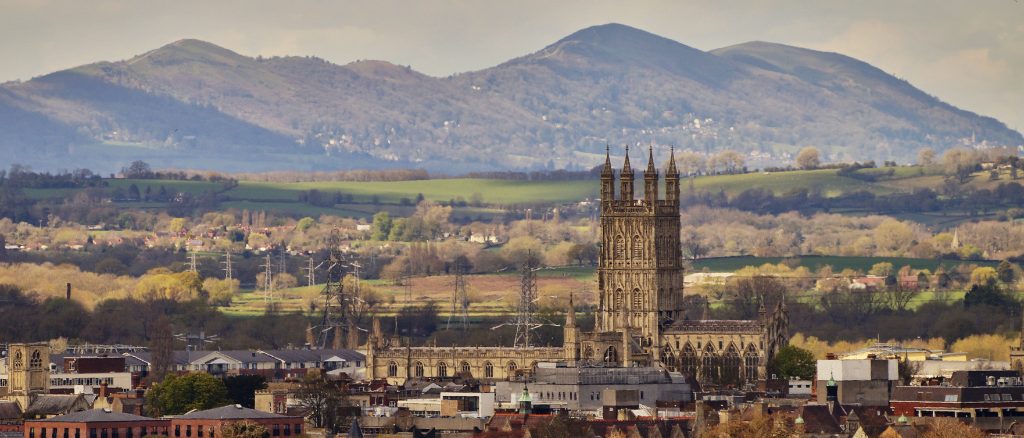
Lifelys started in Gloucester. My father set the practice up here in 2007, working on residential surveys across the city and the Severn Vale, and I grew up in Gloucester before studying in Bristol. The business has changed since then, and it is now based in Bristol and focused entirely on structural inspection, but Gloucester is where it began and it remains part of the area I cover.
That history is worth mentioning because local knowledge in this job is not a marketing line. Gloucester housing has its own patterns, and they are quite different from Bristol twenty five miles down the M5.
Clay and trees are the main event here
Gloucester sits in the Severn Vale on the Lias Group, mostly Charmouth Mudstone, which weathers at the surface to clay. This is a more shrinkable material than the Mercia Mudstone that underlies much of Bristol, and the consequence is straightforward. Gloucester sees more genuine clay shrinkage subsidence than the cities to the south.
The mechanism is always the same. Clay loses moisture in a dry summer and shrinks. A mature tree accelerates that by drawing water out of the soil within reach of its roots. A house on shallow Victorian or interwar foundations then settles unevenly on the side nearest the tree, and cracking appears, typically wider at the top, often around windows and doors, and often opening in late summer and closing again in winter.
Longlevens, Hucclecote, Barnwood, Tuffley and Abbeydale are full of the combination that produces this: interwar and postwar houses on clay with mature street trees and garden trees that were planted small and are now very much not. It is the single most common reason I am asked to inspect in Gloucester.
The good news is that the answer is far less dramatic than most people fear. Seasonal movement that has been going on for decades without progressing is not the same as active subsidence, and underpinning is recommended far more often than it is needed.
Flooding is a structural question here in a way it is not elsewhere
Gloucester sits where the Severn, the Frome and the low lying vale meet, and parts of the city and the surrounding villages have a serious flood history. The summer 2007 floods are still the reference point locally, and areas along the river and the Castle Meads and Alney Island side of the city remain sensitive.
Flooding matters structurally for reasons that are not always obvious. Prolonged saturation softens the ground beneath shallow foundations. Floor slabs and screeds can lift or settle. Solid walls stay wet for months and the damage that follows is often mistaken for movement, or the reverse, with genuine movement dismissed as flood damp. Where a house has flooded more than once, understanding which cracks predate the flooding matters for insurance as much as for the building.
If you are buying near the river, a flood risk search tells you about the water. It does not tell you what the water has already done to the building. That is what an inspection is for.
The scarp edge and Robinswood Hill
East of the city the ground rises to the Cotswold escarpment, and the geology changes to harder limestones sitting over weak Lias mudstones. That combination is the classic recipe for cambering and landslip, and slope movement is well documented along the Cotswold scarp. Robinswood Hill, the outlier standing on the south east edge of Gloucester, has the same layered structure in miniature.
For properties around Brockworth, Churchdown, Upton St Leonards and the lower slopes below the scarp, this means cracking should be read with slope movement as a possibility rather than assumed to be tree related. The patterns differ, and so do the recommendations.
Postwar estates and non traditional construction
Gloucester built a lot of housing quickly in the middle of the last century, and a proportion of it is not conventional brick and block. Precast reinforced concrete types, steel framed houses and no fines concrete construction all appear across the postwar estates, and they come up regularly during purchases because lenders treat them differently.
Be aware of what an inspection can and cannot do here. I can carry out a visual structural inspection and report on the condition and behaviour of what is visible. What I do not do is intrusive investigation, structural calculations or the specific certification schemes that some lenders require for particular precast types. If your lender has asked for a named certificate for a designated defective type, that is specialist work and I will tell you so rather than sell you a report that does not answer the question.
Where I fit
Most enquiries follow the same route. A survey or a mortgage valuation flags cracking and recommends a structural engineer, and nothing moves until somebody produces a report.
I inspect and report. I do not design repairs, produce calculations or specify remedial work, and I have no relationship with any contractor. That independence is the whole point. The person telling you whether you need underpinning should not be the person who profits if you do, and in Gloucester, where so much of what I see turns out to be seasonal clay movement rather than progressive subsidence, that distinction saves people a great deal of money.
Reports are issued within 24 hours of the inspection.
Areas I cover
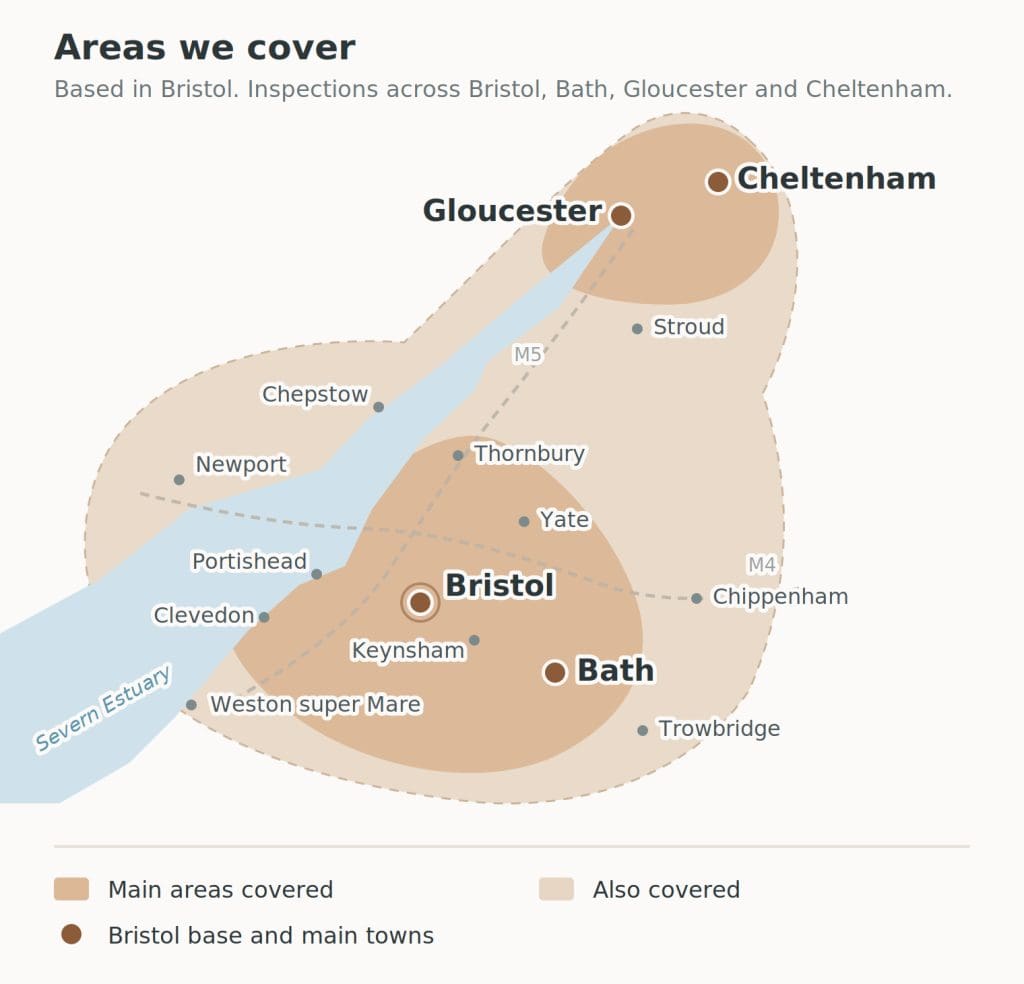
Gloucester and the surrounding GL postcodes, alongside Cheltenham, Bristol and Bath. Gloucester is a straight run up the M5 from my base in Bristol, and it is an area I have worked in since the practice started here.
Common questions
Why does Gloucester get more subsidence than Bristol? Largely because of what is under it. Gloucester sits on Lias clay, which shrinks and swells more readily than the Mercia Mudstone found across much of Bristol. Add mature trees and a dry summer and you have the classic conditions for clay shrinkage subsidence.
There is a big tree near my house and cracks have appeared. Should I remove it? Not before somebody has looked properly. Removing a mature tree from clay soil can cause heave as the ground recovers moisture over following years, and heave damage can be worse than the original problem. Tree removal is sometimes right and often not, and it is a decision that should follow a diagnosis rather than precede one.
Can you inspect a non traditional or precast concrete house? I can carry out a visual structural inspection and report on what is visible. If your lender requires a specific certificate for a designated defective construction type, that needs intrusive investigation and specialist certification, which I do not provide. Tell me what the lender has asked for and I will say plainly whether my report will satisfy it.
How quickly can you inspect? Usually one to two weeks, with a faster option when a sale is under pressure. The report follows within 24 hours of the inspection.
Not Sure Which Report You Need?
Whether it’s one crack or a concern about the whole property, we’ll help you find the right report, and give you a fixed-fee quote within one working day.

Fast Quoting,
No-Obligation
Tell us what you're concerned about and we'll come back with a clear quote, no jargon, no pressure, no obligation. You'll know the cost and what's included before you commit to anything.

24-Hour
Reports
Once the inspection's done, you're not left waiting. You'll have your full written report within 24 hours, so you can make a decision and move on, whether that's reassurance or next steps.

Qualified Engineer,
Not a Call Centre
You deal directly with me, a Chartered Structural Engineer (CEng MICE), from quote to inspection to report. No handoffs, no junior inspector standing in.

Plain-Language Reports
No dense technical jargon you need a second opinion to understand. Every report tells you plainly what's causing the problem, how serious it is, and what, if anything, you need to do next.
Ready for Clarity on Your Crack or Structural Concern?
Tell us a bit about what you've noticed and the property, and we'll come back with which report's right for you and a clear, no-obligation quote. We'll then confirm a date and get your report to you within 24 hours of the inspection.
Prefer to call or email?
Call us on 01452 790 887
Or email us here at:
office@lifelysurveyors.co.uk