
Structural Issues in Bristol: What Homeowners and Buyers Should Know
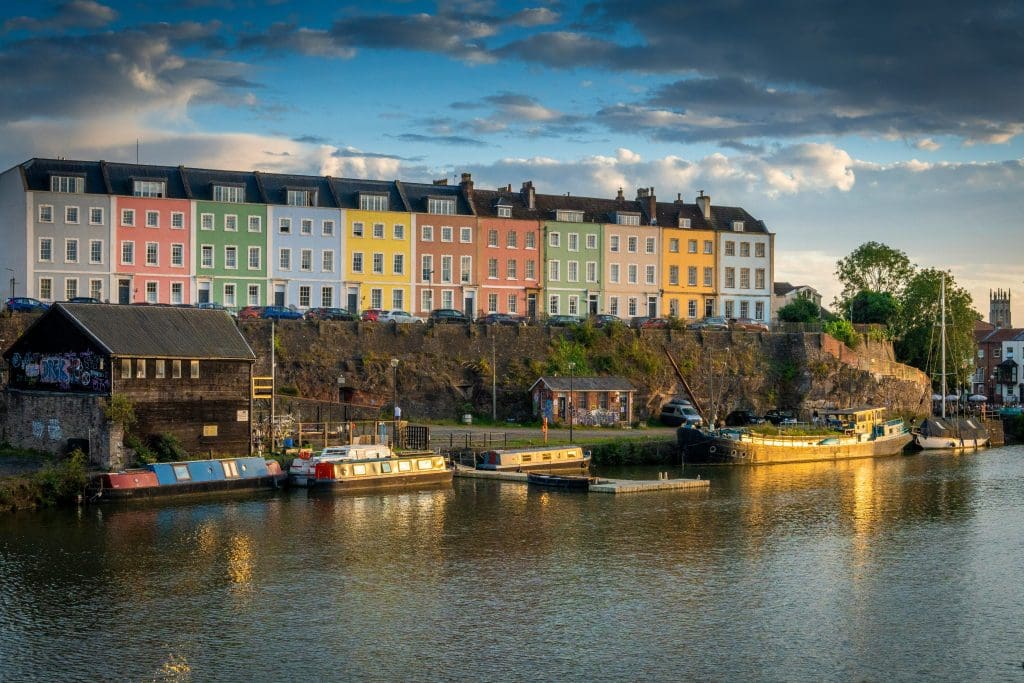
Bristol is an unusually varied city to inspect. Within a couple of miles you can move from Carboniferous limestone under Clifton, to coal measures under Kingswood and St George, to soft ground along the Avon at Bedminster. The housing stock varies just as much, from Georgian terraces with vaulted cellars to interwar semis in Horfield and postwar infill on bombed sites.
That variety is why the same crack means different things in different parts of the city. This page explains what I see most often in Bristol, and where.
The ground under Bristol changes quickly
Most cities sit on one dominant geology. Bristol sits on several.
The limestone ridge running through Clifton and Durdham Down and out along the Avon Gorge gives firm founding conditions. Move east and south and you are onto the Coal Measures, with Pennant sandstone that built half the city and coal seams that were worked beneath it. North and central Bristol is largely Mercia Mudstone, a clay that shrinks and swells with moisture. Along the Avon and the Frome there is alluvium and made ground, which is softer again.
The British Geological Survey records that the Lower Jurassic mudstones and parts of the Mercia Mudstone Group in the Bristol district contain enough smectite to change volume as moisture levels change, and that vegetation, particularly trees, is the main influence on that moisture content. In practice, that is why so many Bristol subsidence cases in Redland, Bishopston, Henleaze and Westbury on Trym involve a mature tree, a shallow Victorian or Edwardian foundation and a dry summer.
Bristol has a mining legacy that surprises people
The Bristol and Somerset coalfield was worked for centuries. Production at the Bristol and Nailsea collieries ended in 1963, but the workings themselves are still there. Deep workings have generally settled long ago. Shallow workings are the ones that matter, because they do not consolidate in the same way and can still degrade towards the surface.
There is also quarrying beneath the city that has nothing to do with coal. The Redcliffe Caves are hand dug sandstone workings running beneath a densely built part of central Bristol, and the records of them are patchy.
For a buyer, the practical points are simple. A coal mining search is cheap and worth having in the eastern and southern parts of the city. Mining risk is a matter for a search and, if needed, a ground investigation, not something anyone can confirm by looking at a wall. What I can tell you is whether the cracking in front of us is consistent with ground movement at all, which is often the question that actually needs answering.
Steep ground means retaining walls, and retaining walls fail quietly
Totterdown, Kingsdown, Cliftonwood, Windmill Hill and Montpelier are all built on slopes steep enough that the gardens are stacked. Between them sit Pennant stone retaining walls, many of them Victorian, most of them built without drainage and none of them designed for the loads now behind them.
Leaning garden walls are the single most common thing I am asked to look at in these areas, and they are worth taking seriously. A boundary retaining wall that fails takes a garden, sometimes a neighbour’s garden, and occasionally part of a building with it. They are also a frequent cause of arguments during a sale, because responsibility for a shared wall is rarely clear.
Bay windows on Victorian terraces
Bristol’s terraces are full of bays, and bays move. They are usually built on shallower foundations than the main front wall, they carry a disproportionate amount of glass and masonry, and they were often built as a semi independent structure. Tapered cracking at the junction between the bay and the main wall is one of the most common things I inspect, and in most cases it is long standing movement rather than anything active.
The same terraces bring other recurring themes. Roof spread where a rear addition roof has pushed the wall out. Lintel and arch cracking over openings where the original timber or brick arch has decayed. Wall tie problems in the cavity walls of the interwar semis in Horfield, Filton, Knowle and Southmead.
The Bristol buying process, and where I fit
Most enquiries reach me through the same route. A Level 2 or Level 3 survey, or a mortgage valuation, flags cracking and recommends a structural engineer. The sale then sits still until somebody produces a report.
I inspect and report. I do not design repairs, produce calculations or specify remedial work, and I have no relationship with any contractor. That matters most in exactly this situation, because the person telling you whether you need underpinning should not be the person who profits if you do. Most of the time the answer is that you do not.
Reports are issued within 24 hours of the inspection, which is usually what is needed when a chain is waiting.
Areas I cover
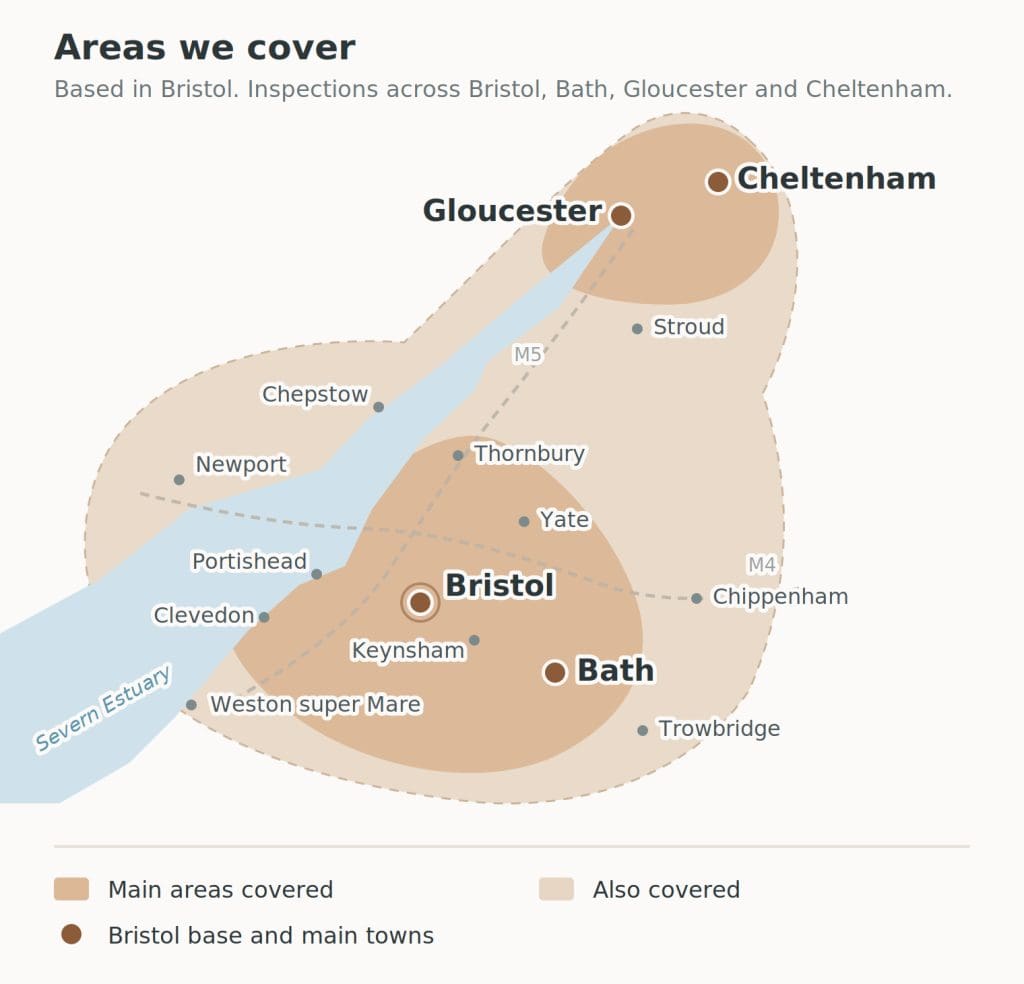
Bristol and all BS postcodes, plus Bath, Gloucester, Cheltenham and the surrounding areas. I live in Bristol and work in this region only, which is why availability is usually a week or two rather than a month.
Common questions
Do I need a coal mining search for a Bristol property? If the property is in the eastern or southern parts of the city it is worth having, and your solicitor will often order one as a matter of course. It is inexpensive and it answers a question that cannot be answered by looking at the building.
Is Bristol clay soil? Parts of it. North and central Bristol are largely Mercia Mudstone, which shrinks and swells with moisture and is the usual culprit in tree related subsidence. Other parts of the city sit on limestone or sandstone where clay shrinkage is not the issue at all. This is why a general answer about Bristol soil is not much use for a specific house.
Are cracks in Victorian terraces normal? Many are. Old buildings on shallow foundations settle, and most of what I inspect turns out to be historic movement that has stopped. The purpose of the inspection is to tell the difference between that and something progressive.
Do I need a structural engineer or a surveyor? A surveyor assesses the whole property and its condition. A structural inspection looks specifically at movement and the load bearing structure and explains the cause. If your survey has recommended a structural engineer, it is the second one you need.
How quickly can you inspect? I am usually booking one to two weeks ahead, with an option for a faster slot when a chain is under pressure. The report follows within 24 hours of the inspection.
Not Sure Which Report You Need?
Whether it’s one crack or a concern about the whole property, we’ll help you find the right report, and give you a fixed-fee quote within one working day.

Fast Quoting,
No-Obligation
Tell us what you're concerned about and we'll come back with a clear quote, no jargon, no pressure, no obligation. You'll know the cost and what's included before you commit to anything.

24-Hour
Reports
Once the inspection's done, you're not left waiting. You'll have your full written report within 24 hours, so you can make a decision and move on, whether that's reassurance or next steps.

Qualified Engineer,
Not a Call Centre
You deal directly with me, a Chartered Structural Engineer (CEng MICE), from quote to inspection to report. No handoffs, no junior inspector standing in.

Plain-Language Reports
No dense technical jargon you need a second opinion to understand. Every report tells you plainly what's causing the problem, how serious it is, and what, if anything, you need to do next.
Ready for Clarity on Your Crack or Structural Concern?
Tell us a bit about what you've noticed and the property, and we'll come back with which report's right for you and a clear, no-obligation quote. We'll then confirm a date and get your report to you within 24 hours of the inspection.
Prefer to call or email?
Call us on 01452 790 887
Or email us here at:
office@lifelysurveyors.co.uk