
Should You Get a Structural Engineer Before Buying a House?

A structural engineer is worth having before you buy when there’s a reason to question the structure. That might be visible cracking, past repairs, major alterations, or a house you already know needs significant work. A structural engineer’s report tells you what’s causing any movement, whether it’s still happening and what it will take to fix, before you commit. For most straightforward purchases, a surveyor’s Level 2 or Level 3 survey is the right place to start.
What does a structural engineer add before you buy?
A survey looks at the condition of the whole house. A structural engineer looks only at the structure, but in more depth. Before a purchase, that depth gives you four things:
- A diagnosis, not just an observation. You find out what caused a crack, not only that it’s there.
- A clear opinion. My reports include a discussion section where I give you my professional view of what the evidence shows. No fence sitting.
- Repair guidance a builder can price. If work is needed, the report says what, so you can get quotes before you exchange.
- Facts for negotiation. Knowing the scale of any repair puts you in a stronger position when discussing the price with the seller.
When is a pre-purchase structural report worth it?
You can see cracks or movement
If you’ve spotted cracking, sloping floors, sticking doors or a wall that looks out of line during a viewing, a structural engineer can tell you whether it matters before you spend money on legal fees and surveys.
The house has had structural repairs
Crack stitching, underpinning, new lintels or a rebuilt wall all suggest the house has moved in the past. The key question is whether the repair worked and the movement has stopped.
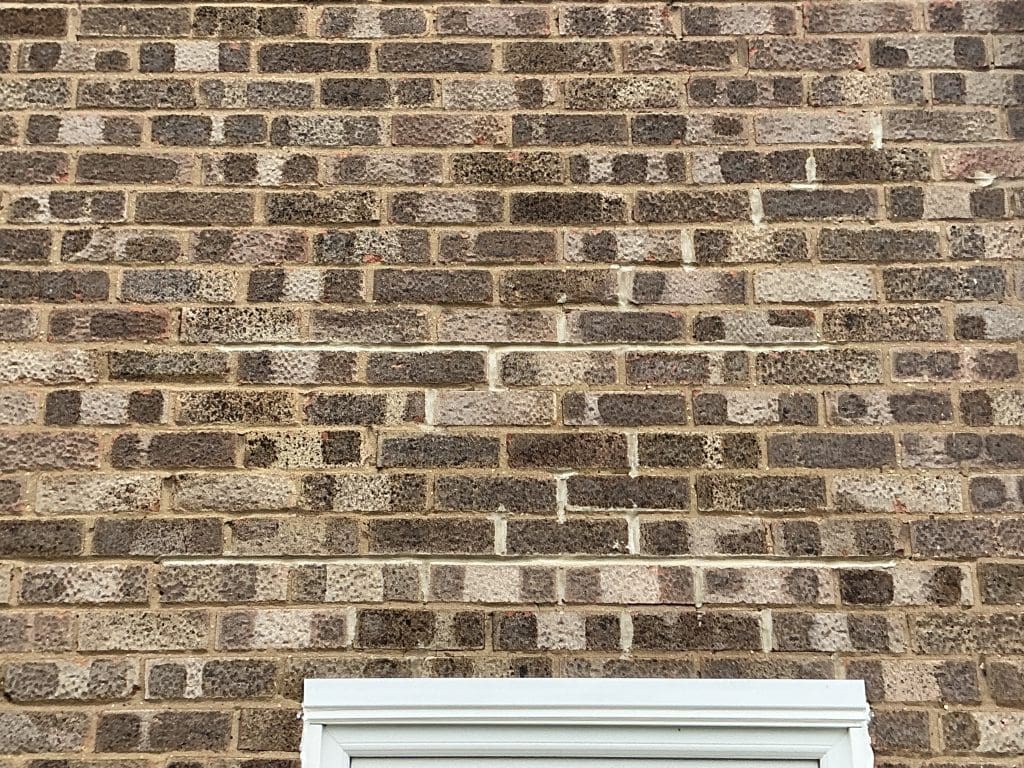
A past crack stitching repair. Before buying, it’s worth knowing whether the movement behind it has stopped.
The seller has declared past subsidence
If the property information form mentions subsidence or an insurance claim, your solicitor will ask questions. A structural report gives you an independent view of the house as it stands today.
Walls have been removed or the house has been extended
Many older homes have had chimney breasts removed, rooms knocked through or extensions added over the years. If you’re unsure whether alterations were done properly, a structural engineer can look for signs of distress in the structure.
You’re buying a renovation project
If you already know a house needs a new kitchen, rewiring and redecorating throughout, you may not need a long list of condition defects. What you really need to know is whether the structure is sound. A General Structural Inspection answers that question directly.
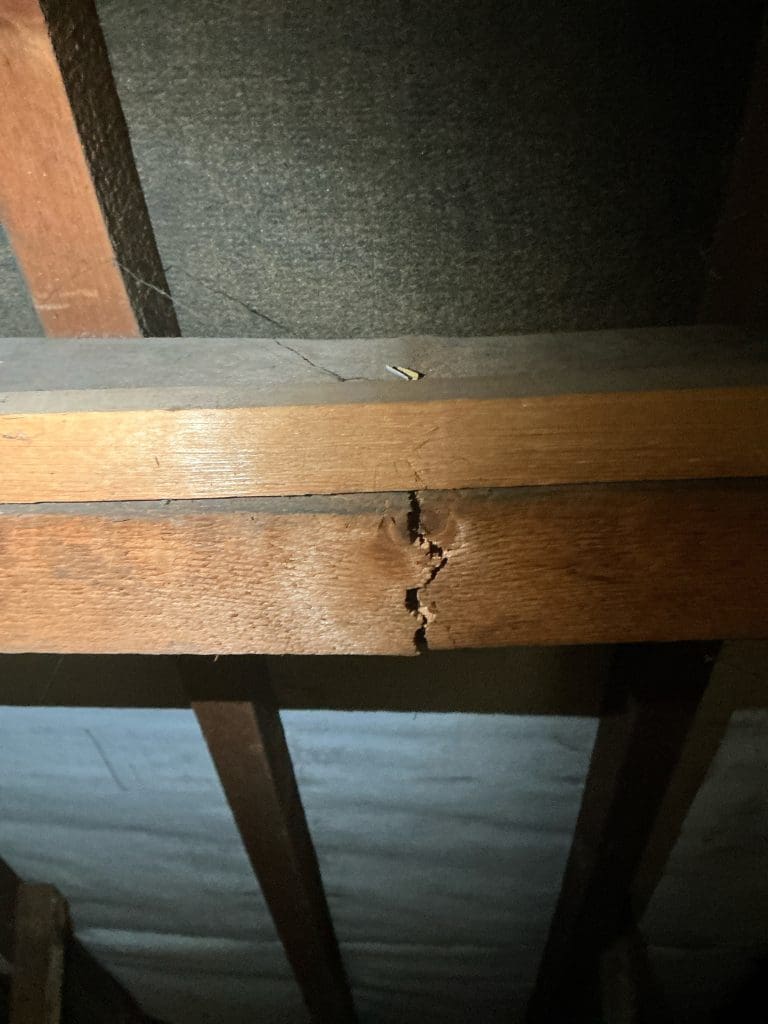
A split purlin in a roof space. Defects like this are easy to miss on a viewing but matter when planning a renovation.
The house is older, altered or on a slope
Many of the Victorian villas in Clifton and Cotham, and the homes on steep streets in Kingsdown, have more complex structures than a typical modern house. These are the properties where a structural engineer’s view is most often useful.
When don’t you need one?
Honestly, often you don’t. If you’re buying a typical home in reasonable condition, with no visible cracking and no history of movement, a Level 2 or Level 3 survey is the right starting point. Your surveyor will flag anything that needs a structural engineer.
Newer homes, such as many in Bradley Stoke and Stoke Gifford, rarely need a structural engineer before purchase unless something specific has been noticed.
Is a structural engineer’s report the same as a structural survey?
Not quite. “Structural survey” traditionally meant a full condition survey by a surveyor, now called a Level 3 Building Survey. Today it’s also used to mean a structural engineer’s report. The two do different jobs and often work together: the survey covers the whole house, and the structural report answers the structural questions in depth. My guide to the different types of property survey
A structural engineer’s report doesn’t cover damp, roof coverings, windows, decoration or services, so it isn’t a replacement for a condition survey on a typical purchase.
What happens during a pre-purchase inspection?
I research the property and local ground conditions before I visit. On site, I inspect the structure inside and out, measure any cracks, check walls for tilt and floors for level, and look for causes such as trees, drains, roof spread or past alterations. The inspection is visual and non-invasive. The estate agent arranges access with the seller.
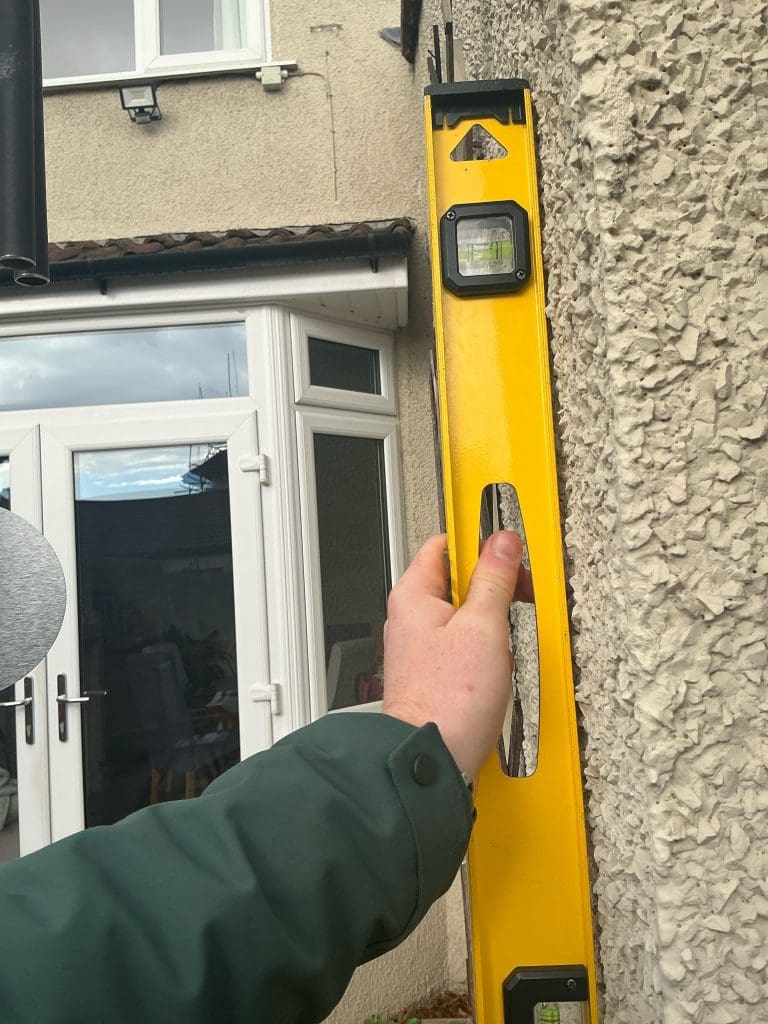
Checking a wall for tilt during a pre-purchase inspection.
You receive a written structural report within 48 hours of the inspection, with photos. It sets out the brief, the property and ground conditions, what I found, a discussion of my professional opinion, my conclusions, and recommendations in order of priority. The outcome is usually one of three: no structural action needed, further investigations to confirm a cause, or specific repairs your builder can quote for.
Because I don’t carry out repairs or design work, I have nothing to sell you after the report. My only job is to give you an honest answer before you commit.
Which report do you need?
- Specific Structural Inspection (SSI): one crack or one defect you’ve spotted. £570 including VAT, fixed fee. What is an SSI?
- General Structural Inspection (GSI): the main structure of the whole property, ideal for renovation projects or several concerns. From £810 including VAT, depending on size. What is a GSI?
Both include a written report within 48 hours of the inspection.
About the author
George Lifely is a Structural Engineer (CEng MICE) and AssocRICS surveyor based in north Bristol. He specialises in structural engineer reports for homeowners and buyers, explaining cracks and movement in plain English. He is fully independent, with no repairs or design work to sell.
Get a fixed fee quote
Tell me about the property and what’s concerning you, and I’ll tell you honestly whether a structural report will help, with a clear, no obligation quote. Get a quote
I inspect homes across north Bristol, including Clifton, Cotham, Kingsdown, Redland, Henleaze and Stoke Gifford, as well as the wider Bristol area. See the areas I cover
Frequently asked questions
Should I get a survey or a structural engineer before buying?
For most homes, start with a survey. Choose a structural engineer if you’ve seen cracks or movement, the house has had structural repairs, or you’re buying a renovation project and mainly need to know the structure is sound.
Can I get a structural engineer’s report instead of a survey?
For a renovation project where the structure is your main concern, yes. For a typical purchase, a structural report works best alongside a survey, because it doesn’t cover damp, services or general condition.
When should I book it?
Before you exchange contracts. Once you exchange, you’re committed to the purchase.
Can I use the report to renegotiate the price?
It can give you the facts to do so. If repairs are needed, the report sets them out clearly, and you can discuss them with your agent and solicitor.
Who arranges access?
We do. We contact the estate agent or the seller directly to arrange a convenient time.
Not Sure Which Report You Need?
Whether it’s one crack or a concern about the whole property, we’ll help you find the right report, and give you a fixed-fee quote within one working day.

Fast Quoting,
No-Obligation
Tell us what you're concerned about and we'll come back with a clear quote, no jargon, no pressure, no obligation. You'll know the cost and what's included before you commit to anything.

48-Hour
Reports
Once the inspection's done, you're not left waiting. You'll have your full written report within 48 hours, so you can make a decision and move on, whether that's reassurance or next steps.

Qualified Engineer,
Not a Call Centre
You deal directly with me, a Chartered Structural Engineer (CEng MICE), from quote to inspection to report. No handoffs, no junior inspector standing in.

Plain-Language Reports
No dense technical jargon you need a second opinion to understand. Every report tells you plainly what's causing the problem, how serious it is, and what, if anything, you need to do next.
Ready for Clarity on Your Crack or Structural Concern?
Tell us a bit about what you've noticed and the property, and we'll come back with which report's right for you and a clear, no-obligation quote. We'll then confirm a date and get your report to you within 48 hours of the inspection.
Prefer to call or email?
Call us on 01452 790 887
Or email us here at:
office@lifelys.co.uk